
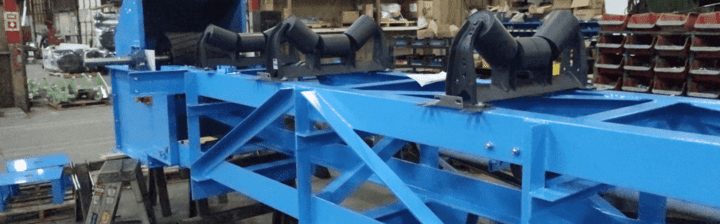
DISCHARGE GATES
Streamline material flow with advanced hydraulic mechanisms.
- Regulate flow from material bins
- Hydraulic cylinder features oversized rod and proximity switches
- Self-contained power units with built-in reservoirs
- AR-500 slide and liner in wear areas increases the durability and life of the gates
- Completely assembled for bolt-on installation
Orthman offers a comprehensive range of conveyor products to meet various needs, including:
- Augers
- Buckets
- Collars
- Couplings and Coupling Shafts
- Covers
- Drive Shafts
- End Plates
- Flighting
- Gates
- Inlet/Discharge
- Seals
- Trough
FREQUENTLY ASKED QUESTIONS
Discharge gates regulate the flow of bulk material on a conveyor, release material at any chosen point along the run, and provide accurate cut-off for scale-feeding operations. Orthman builds manual, electric, and pneumatic gates so flow control can be matched to both the conveyor and the material being handled.
Orthman offers manual, electric, and pneumatic discharge gates, plus hydraulic slide gates for heavier flow-control duty. The right type depends on the conveyor design and the nature of the material, which is why the gate should be specified during initial system design rather than added afterward.
Orthman hydraulic slide gates use an AR-500 slide and liner in the wear areas to extend gate life, a hydraulic cylinder with an oversized rod and proximity switches, and self-contained power units with built-in reservoirs. They ship completely assembled for bolt-on installation.
The choice comes down to two factors: the type of conveyor and the nature of the material being conveyed. A dry free-flowing product and a heavy or abrasive one call for different gates and actuation. Orthman recommends selecting the gate during initial design so it integrates cleanly with the system.
Yes. Orthman discharge gates provide accurate cut-off for scale-feeding operations, which makes them well suited to batching and metering applications where precise control of material flow matters. Electric and pneumatic actuation supports automated, repeatable operation.
A discharge gate is an essential component of the system, not just an accessory. Designing the right gate in from the start ensures reliable flow regulation, clean cut-off, and seamless operation, and it avoids costly retrofits once the conveyor is already built.